

Heat and humidity are the weather signatures of summer, but sometimes it’s too hot to ride your horse. While horses and humans can sweat to dissipate body heat, it’s sometimes not enough. There may be other factors at work as well, such as the intensity of exercise and your horse’s tendency to sweat in any condition, but especially in extreme conditions. Overheating is a significant problem for some horses during the summer.
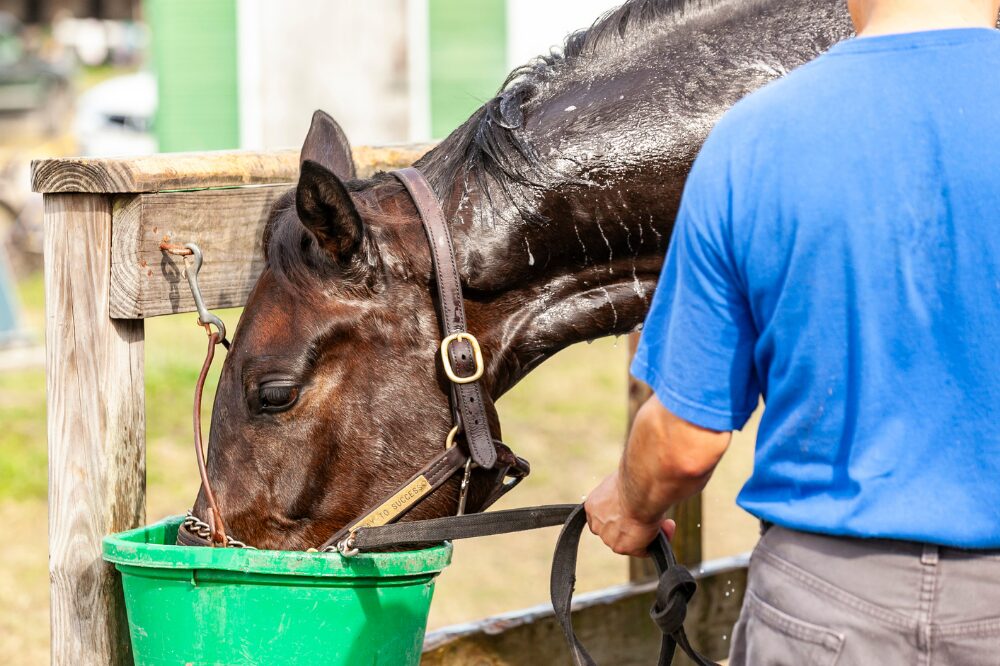
Start With Temperature Plus Humidity
- As a general rule, you can gauge whether it’s too hot to ride by adding the actual temperature to the percentage of relative humidity. For a 90-degree day with 85 percent humidity, the total is 175, not to mention a wild, frizzy hair day.
- Here’s where things get muddy. What is the magic number? There is no hard-and-fast rule. I found numerous articles on this topic, each with a different magic number. It might be 140, 150, 180, or above. Generally speaking, the hotter and more humid the weather becomes, the more cautious you should be.
- Humid weather raises a horse’s temperature because the moisture in the air prevents your horse’s ability to evaporate sweat.
- When searching for the ideal temperature, consider humidity more than temperature.
- The National Weather Service also issues warnings about extreme heat and high humidity, so check your weather apps. Look for high heat index values and take heed.
The FEI has a Different Way to Measure Things
- Sometimes, the “temp + humidity” trick will steer you wrong. The FEI began measuring the “hotness” in 1986 as it prepared for the Olympics in Atlanta. They use a gauge to measure temperature, humidity, solar radiation, and wind. Here’s what the indicator does:
“The WBGT Index: The only validated heat index for equestrian sport is the WBGT index3 . This was developed primarily for management of the three-day event cross-country at the Atlanta 1996 Olympic Games but was also used in Athens 2004 and Beijing 2008. An FEI project to refine the guidelines based on the WBGT for Eventing, Dressage and Jumping is currently in progress. The WBGT index is a single “temperature” that takes into account the effects of air temperature, humidity, sun and wind all at the same time. It is calculated from a measurement of Wet Bulb temperature and a measurement of the temperature inside a black globe (Figure 1). Alternatively, it can be measured with an inexpensive (~US$160; £120; €140) handheld device such as the ExTech HT30 which is widely available (Figure 2). The WBGT index = 0.7 x Wet Bulb Temperature (°C) + 0.3 x Black Globe Temperature (°C) Why do we use the WBGT Index? The WBGT Index is used because although it’s only one number, it accurately weighs up all the factors that determine thermal environmental load. It is also easy to measure with simple and inexpensive equipment such as the ExTech HT30”
- Do we have access to this gauge? Usually not, so we need to use common sense and look at the big picture to keep our horses out of the danger zone.
- The other thing to do is to take your horse’s temperature frequently. As the world heats up, your horse’s core temperature can rise to unsafe levels. A thermometer is the only fancy equipment you need.
To read the entire Olympic sweat studies from the FEI, download this.
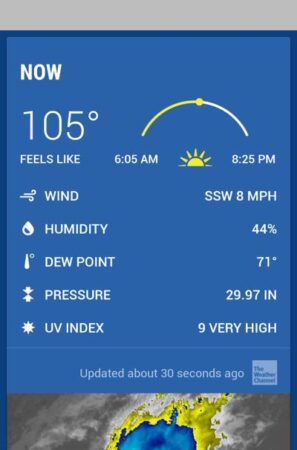
Not a huge fan of this nonsense. Time to skip riding.
Other Factors Indicating It’s Too Hot to Ride Your Horse
Your horse’s fitness level
- The high-performance sport horse, ridden six days a week at top levels, usually copes with heat much more easily than the weekend warrior horse, which is sedentary all week and then worked on the weekends.
- A horse’s fitness level can be measured and tracked over time using vital signs, including temperature, heart rate, and respiratory rate. You can measure vital signs before you ride, during the middle of your ride, and immediately after the exercise.
- Take vital signs every five minutes after exercise until your horse’s vitals return to normal. Note this length of time somewhere handy. This measurement is a good indicator of recovery.
- As a horse gains fitness from month to month, their vital signs during exercise will lower, and their recovery rate will shorten. Your horse will also be better equipped to work harder for more minutes of moderate-intensity exercise.
The intensity of your horse’s exercise
- If you notice your horse having a harder time in hot conditions, it is too hot to ride. Hot weather riding doesn’t mean you do max training because of some arbitrary plan that cares not about the effects of heat.
- You may be able to modify your horse’s exercise in hot, humid conditions. There is no need to gallop cross-country. How about a trail ride instead? If you’re lucky, you might find a creek and enjoy the cool water splashing around.
- Shorten the duration of your ride. Tack traps heat.
Your horse’s health conditions
- A younger horse with a clean bill of health will cool down more easily than a horse with health problems. This is especially true for horses with heaves or allergies, which interfere with breathing. Although there is not a significant amount of heat loss due to respiration, some heat is lost. Heaves and some allergies create stress on the respiratory system, impeding heat loss.
- A high respiratory rate can worsen in unfit and unhealthy horses. Notice your horse before rapid breathing becomes an issue. This increase in vital signs will also parallel a high heart rate.
Your horse’s sweating patterns – no sweat
- In the case of anhidrosis, there’s a direct line between the lack of sweat and overheating. Anhidrosis occurs when sweating doesn’t occur at all or when a horse sweats in smaller amounts, often called partial anhidrosis.
Too much sweat
- On the other hand, excessive sweating can also be a problem. That blasted humidity traps moisture on the skin, and your horse may respond by sweating more.
- Humidity interferes with the body’s ability to release heat. The moisture in the air prevents effective evaporative cooling.
- Horse sweat is unique because it’s a fluid, but it has a lot of sodium and other minerals. And because horses lose fluid and electrolytes, the thirst trigger is often missing, as this relies on a concentration of salt.
- Excessive sweating can lead to dehydration and disrupt your horse’s vital mineral levels. Humidity makes everything worse.
- Thanks to some brilliant horse-stuff manufacturers, you can get cooling blankets for your horse. Perfect for cooling down after a ride.
- If you notice your horse has stopped sweating, it is a strong indicator of heat stroke, a dangerous condition that requires immediate veterinary care.
Is your horse dehydrated?
- Dehydration is the starting point for overheating, colic, kidney failure and organ trouble, and even death. It’s nothing to glaze over, and it’s easy to monitor the signs of dehydration.
- Check vital signs. Monitor your horse’s temperature, pulse, respirations, and even digital pulses as you are grooming your horse. Above-normal vital signs, especially an elevated body temperature, indicate that their body is already working hard to cope with hot, humid days. Check in with your vet if you notice your horse’s signs are off.
- To monitor hydration levels, check their gums. They should feel slippery, not sticky or dry, when you run your fingers between their gums and the upper teeth. Anything other than slick is a sign of dehydration.
- Gums that have changed from a pale pink to red, purple, blue, or yellowish-white indicate circulatory and respiratory problems. Call your vet if you see this.
- Continue to check vital signs, especially your horse’s core temp, as you ride and cool out.
- It’s always too hot to ride while dehydrated.
Myth busting about hydration
- It’s false that you shouldn’t offer water after riding or exercise. Drinking won’t cause colic or tying up.
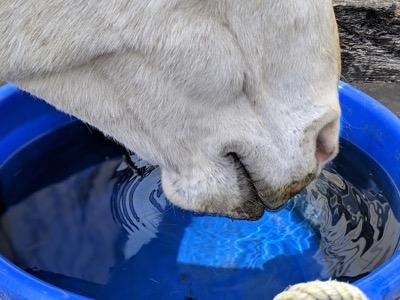
- Offer fresh, clean water as soon as possible. Many horses like gourmet water, flavored with some flax or electrolytes to encourage drinking.
Your horse’s weight
- Extra weight interferes with thermoregulation and contributes to overheating. The additional fatty insulation traps heat and may help bring a horse’s temperature to dangerous levels.
- Overweight horses also tax their cardiovascular systems more. Heat stress effects amplify.
- Read more about the overweight horse here.
Your farm’s amenities
- Are you riding outside in the blazing sun, or is the arena well-ventilated and covered? Are there round pens or paddocks for exercise in the shade?
- Do you have a shaded area for your horse to rest after a rinse?
- Are there fans or ample air circulation to help with evaporative cooling as your horse dries?

A foamy horse does not mean they’re overworked or overheated. It means the latherin protein in the sweat was rubbed, creating foam.
The time of day may dictate whether it’s too hot to ride
- I love to start my day early so I can ride before the ultra-hot weather hits. The early mornings tend to have cooler temperatures, and if you’re lucky, the bugs will still be asleep. Twilight or late evening is also a great time. Riding in the middle of the day is asking for trouble.
- Also, pay attention to the sun. Direct sunlight may be more stressful for your horse’s body temperature, but cloud cover or rain can lead to high humidity levels.
- Weather conditions can change rapidly, often accompanied by a lot of hot air, so pay attention to the forecasts. The heat index on your fave weather app is one to watch.
How long has your horse been in a hot climate?
- Acclimation to temperatures and humidity levels takes time. Hot, humid weather isn’t the norm for all horses. If you live in Canada and travel to Florida for the winter, you will leave the icy cold and arrive in a sauna.
- Don’t forget about sudden weather changes brought by weirdly hot days. There is nothing wrong with taking a few days off from riding and exercising to get through the heatwave.
How are your horse’s diet and drinking habits?
- If you suspect your horse will be sweating, feed electrolytes beforehand. For all-day sweating and non-stop heat, refresh those electrolytes in the afternoon, too.
- Because dehydration is a possibility, encourage your horse to drink as much as possible. Ideally, you already know what your horse likes mixed with water. You can add apple or fruit juice, a tablespoon of their favorite feed, or even a sports drink. Always offer flavored water alongside unflavored water in case your horse is feeling picky.
- Add water to your horse’s meals. Soak the hay for a few minutes and turn the feed meals into a more mushy consistency.
- It’s too hot to ride if your horse is dehydrated.
Is Your Horse Overheated (Hyperthermia)?
- The surefire way to know if your horse is overheated is to take their temperature. When you return from riding, check their vitals. Your horse’s temperature approaches normal after a few minutes – normally. Check every five minutes to monitor progress.
- If the temperature is not returning to normal or the other vital signs are elevated, you need to call your vet. Pronto.
- Do not attempt to cool your horse until you have talked to your vet. The effects of heat stress may worsen by haphazard attempts to cool your horse.
Other signs of heat stress and overheating include:
- Gum discoloration.
- Abnormal vital signs – usually increased respirations and pulse, along with an elevated temperature.
- Sweat that is sticky and thick.
- A previously sweating horse stops sweating.
- Acting depressed and lethargic.
Call the vet. Don’t wait, don’t check the internet, don’t grab lunch, call the vet.

For the love of all things horse, use a thermometer for your guy.
What to do if Your Horse is Overheated
- Talk to your vet, be prepared to tell them your horse’s temperature and other vital signs, and be able to describe the texture of your horse’s gums (slippery or sticky) and their color.
Here’s your plan:
- Your vet can give you exact instructions to follow. This may include dousing with cool or cold water and using fans. Some cooing treatments can make matters worse, so rely on your vet’s plan. Play it safe when in doubt, and consult your veterinarian to determine what is best for your horse.
- Do not give electrolytes. Their body is already unbalanced, and electrolytes can exacerbate the issue. Administer electrolytes before exercise or when your horse is expected to sweat.
- Do not force any water into their mouth. If they want to drink, they can. Provide fresh water.
- Do not give any medications.
- Do monitor your horse’s body temperature. A simple thermometer measuring rectal temperature and a notepad can help you track your horse’s progress.
The most practical tip for deciding if it’s too hot to ride
- When in doubt, don’t ride. There are endless ways to engage your horse, and sometimes the hot weather demands a day off.
- No horse ever perished because they missed a day of exercise. If your horse experiences any signs of discomfort in the weather, skip it. They deserve an extra grooming session instead!
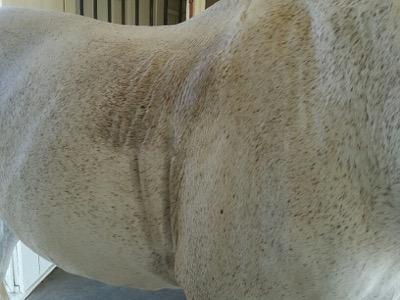
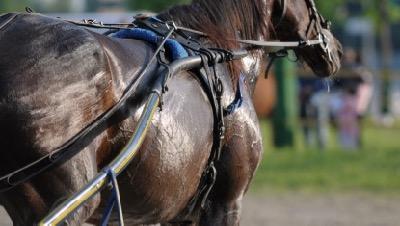
This is my horse’s normal sweat pattern for a hot-ish day. Know your horse’s patterns.

Frequently Asked Questions



Go Shopping
Stock up here for your horse supplies! As an Amazon Associate, I earn from qualifying purchases, but it’s ZERO extra cents to you. As a Walmart Associate, I earn from qualifying purchases as part of their affiliate plan. I appreciate your support! You can also visit my Amazon storefront here: PEG storefront.
Every horse owner needs a digital thermometer for fast and accurate vital signs

A thermometer is one of the best investments in your horse's health you can use.


Help your horse cool out in hot and humid weather.


